“TIME AND TIDE WAIT FOR NO MAN”:
The Sculpture of Argiris Rallias
“Intensity has a space entirely its own,” asserts Italian philosopher Giorgio Agamben.[1] The sculpture of Argiris Rallias carries a plastic intensity, a rare material force that generates its own spatiality. The intensity of his work stems from lived experience and unfiltered emotion, allowing the artist to carve out spaces and times, skillfully blending them together. The twelve works he presents in his studio in Petralona refer to traumatic experiences and environmental destruction. One of the pressing issues the artist addresses is the abrupt transformation and radical alteration of the Cycladic landscape, which leads to its gradual disappearance and devastation. Rallias’ sculptures are fed by images, myths, stories, moments, thoughts, gestures, memories, events, encounters, ultimately by life itself, and more specifically by life in the countryside, on an island, in a wild land surrounded by sea and inhabited by people and animals. The harmonious coexistence of humans and animals within an untamed nature is of deep concern to the artist. Having grown up in a different-era Kythnos, before the invasion of tourism, Rallias knows first-hand the purity and sanctity of animals — what love, care, but also cruelty toward them means. In such an environment, humans and animals form an inseparable body, a vast embrace, tender and suffocating at once, like the many-faced alabaster sculptures he creates. The concrete goat standing atop four iron rods, reminiscent of the “waiting rods” often called proikosidera, is a modern-day martyr, a crucified figure, like the heroic donkey in Robert Bresson’s 1966 film Au hasard Balthazar. Similarly, the slaughtered rooster (Foundation), sacrificed during the laying of a home’s foundations, is an ironic reference to the overbuilding that threatens the identity of the Greek islands. Hanging upside down in space, like a reversed weather vane, Rallias’ iron sculpture becomes the perfect symbol of an inverted world; a world shaken, changing, unnatural. Man no longer needs the decorative and functional rooster to show the direction of the wind since wind turbines now suffice. Rallias’ sculpture is a hymn to lost innocence, engaging experience not simply to reflect it but to complete it. This lived experience begins as personal and is elevated through the sculptural process into something collective. In that sense, it expands and becomes whole, addressing a phenomenon, a social fact, a collective wound,like the destruction of the Greek landscape by unchecked development and human greed.His work, indirectly but clearly, speaks of the destruction of experience itself, one that tries to rescue it, not merely give it form.In Rallias’ sculptures, people and landscapes take center stage people within landscapes, intrinsically linked to them, like Chalepas with the crafted landscape of Tinos, and Papadiamantis with that of Skiathos. Focusing on the duality of familiarity and alienation, the artist sculpts wounds, of both soul and land, transferring into marble his father’s and grandmother’s stories (as in Prika), memories of relatives and neighbors who resemble characters from novels, encounters with nature and its hidden sides (as in August Flies), and meetings with unknown yet remarkable people who prove to be pivotal. For the young sculptor, these encounters are “always in progress,” to borrow again from Agamben, who notes that his meeting with Heidegger and Benjamin “never ended” and in his memory remains “inextricably linked to the yet-untouched-
by-tourism landscape of Provence.” Rallias often channels his anger through subtle humor and irony. In the sculpture Last Dive, a carefree tourist (instead of diving into the sea) lands onto a dry, thorny shrub that the artist brought from Kythnos. Nailed upside down in the shrub, with his bronze bare feet in the air, he too becomes a victim of touristic overdevel opment. The sea has turned into dry land, drillings drained the water table, leaving the land exhausted, resulting in the withering of scrub plants that once held the soil and sustained the ecosystem. Here, a moment of leisure becomes a Kafkaesque Fall. The still motion seen in this work also appears in Pool, where a relief figure is carved inside an old sink made from Pentelic marble. “True civilization is living in your environment without destroying it,” said musician and activist Sting in a 1989 television interview, seated beside Raoni Metuktire, a leader of Brazil’s Indigenous people, who still fights against the destruction of the Amazon rainforest. Sting’s simple thought-advice helps us better understand Rallias’ intentions. In essence, his exhibition titled “Time and tide wait for no man” speaks not only of the landscape’s disappearance, but also of the vanishing of culture, of cultural desertification.From this perspective, the title, a phrase he often heard from his father, is perfectly apt: on the one hand, it suggests a state of emergency that demands mobilization and collective awareness; On the other, it’s a call to resist the forces of touristic commodification.“Sculpture is light,” the artist tells me, quoting Italian art historian Cesare Brandi.And yet, it is Rallias’ own sculpture that offers light. His deeply lived work, steadfastly focused on truth and a love for his homeland, is without doubt a beacon of hope for Greek sculpture. We often say, “Take what you love and live by it,” but in Argiris Rallias’ case, it seems more fitting to say: Take your lived experience and make it what you love.
Christoforos Marinos
Art historian and curator
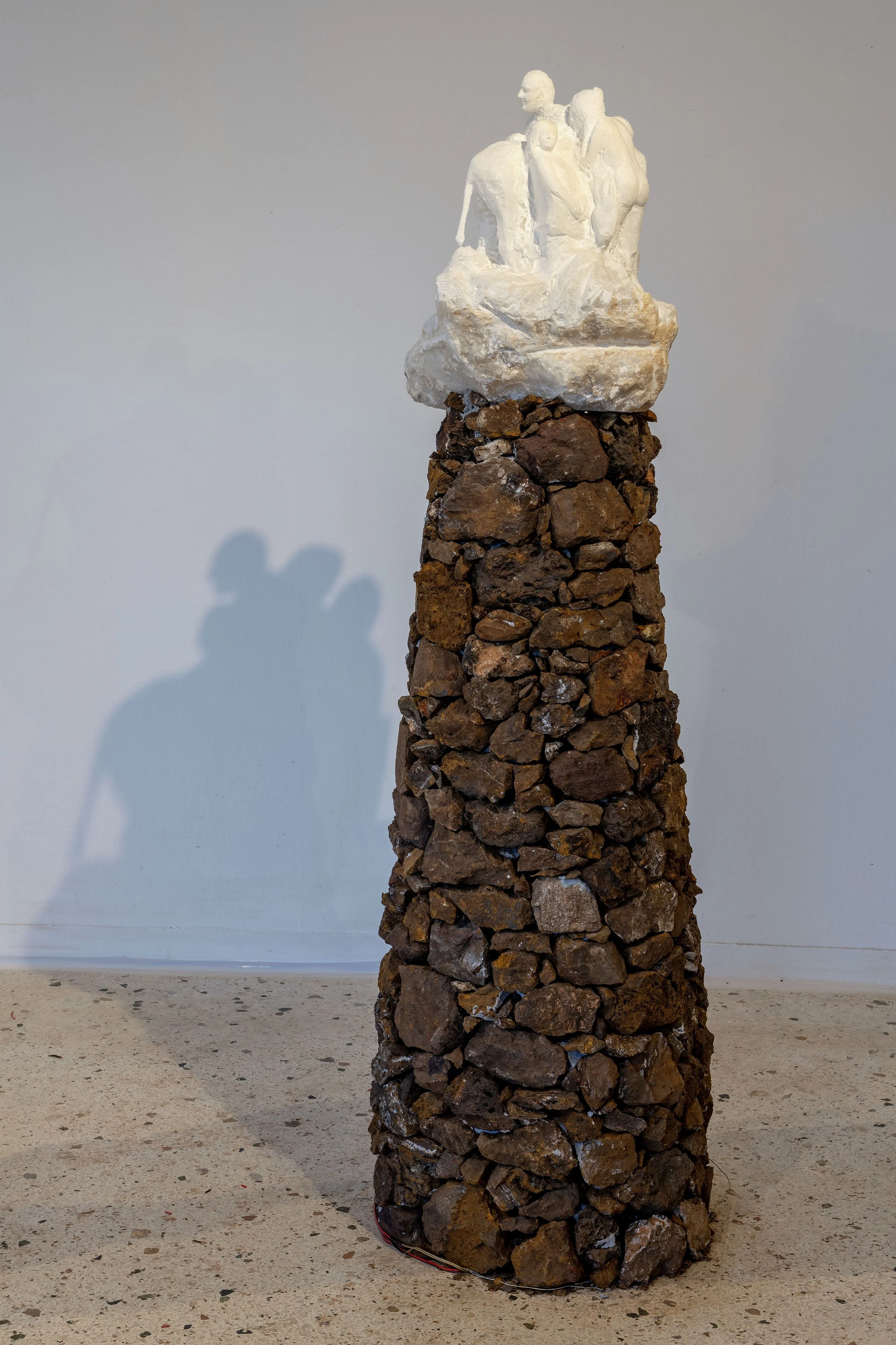
Beacons x3 (2025) Αlabaster, medal stones from Kythnos, light 120 × 30 × 30 cm Φρυκτωρίες x3 (2025) Αλάβαστρο, πέτρες μεταλλείου από την Κύθνο, φως 120 × 30 × 30 εκ.
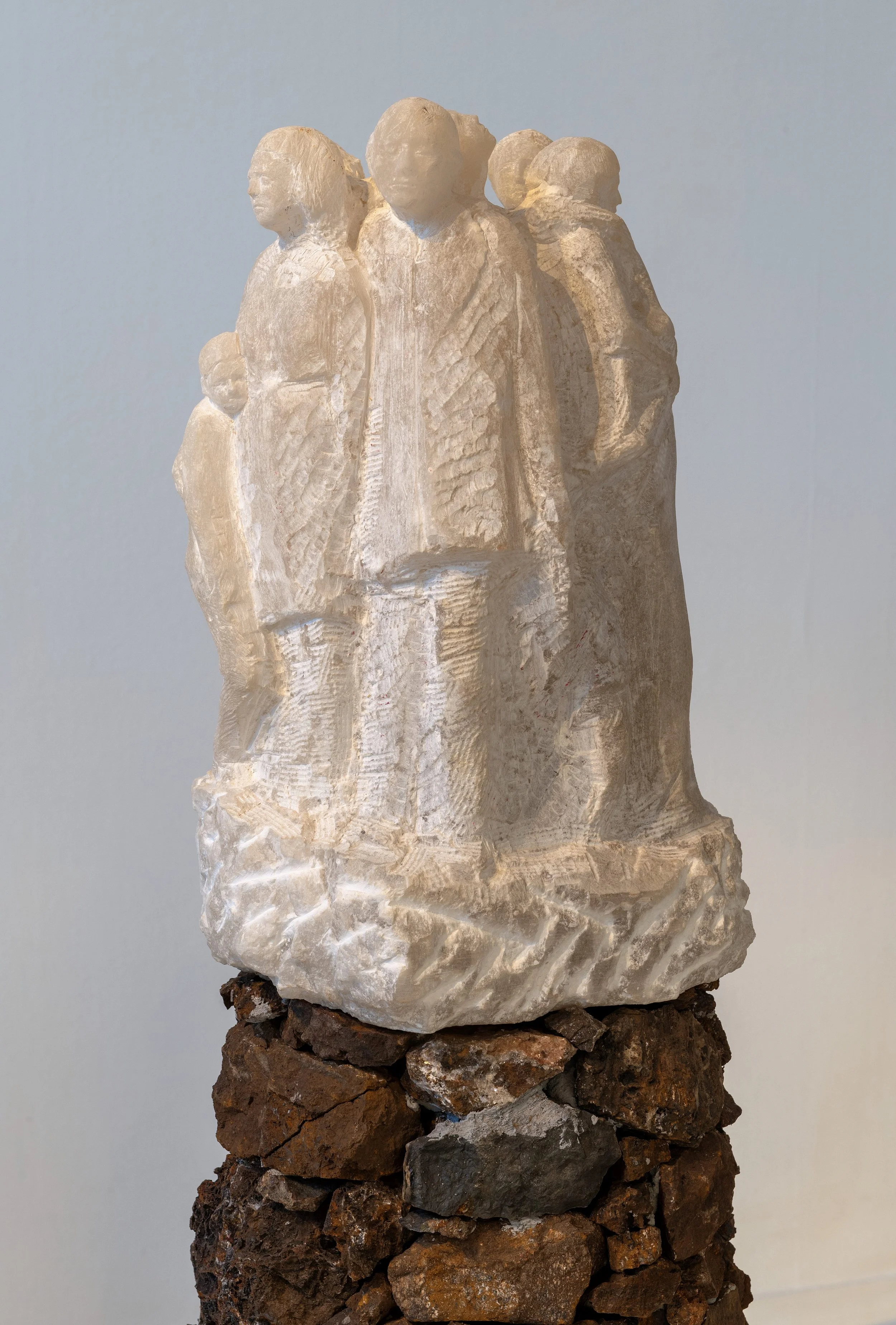
Beacons x3 (2025) Αlabaster, medal stones from Kythnos, light 120 × 30 × 30 cm Φρυκτωρίες x3 (2025) Αλάβαστρο, πέτρες μεταλλείου από την Κύθνο, φως 120 × 30 × 30 εκ.
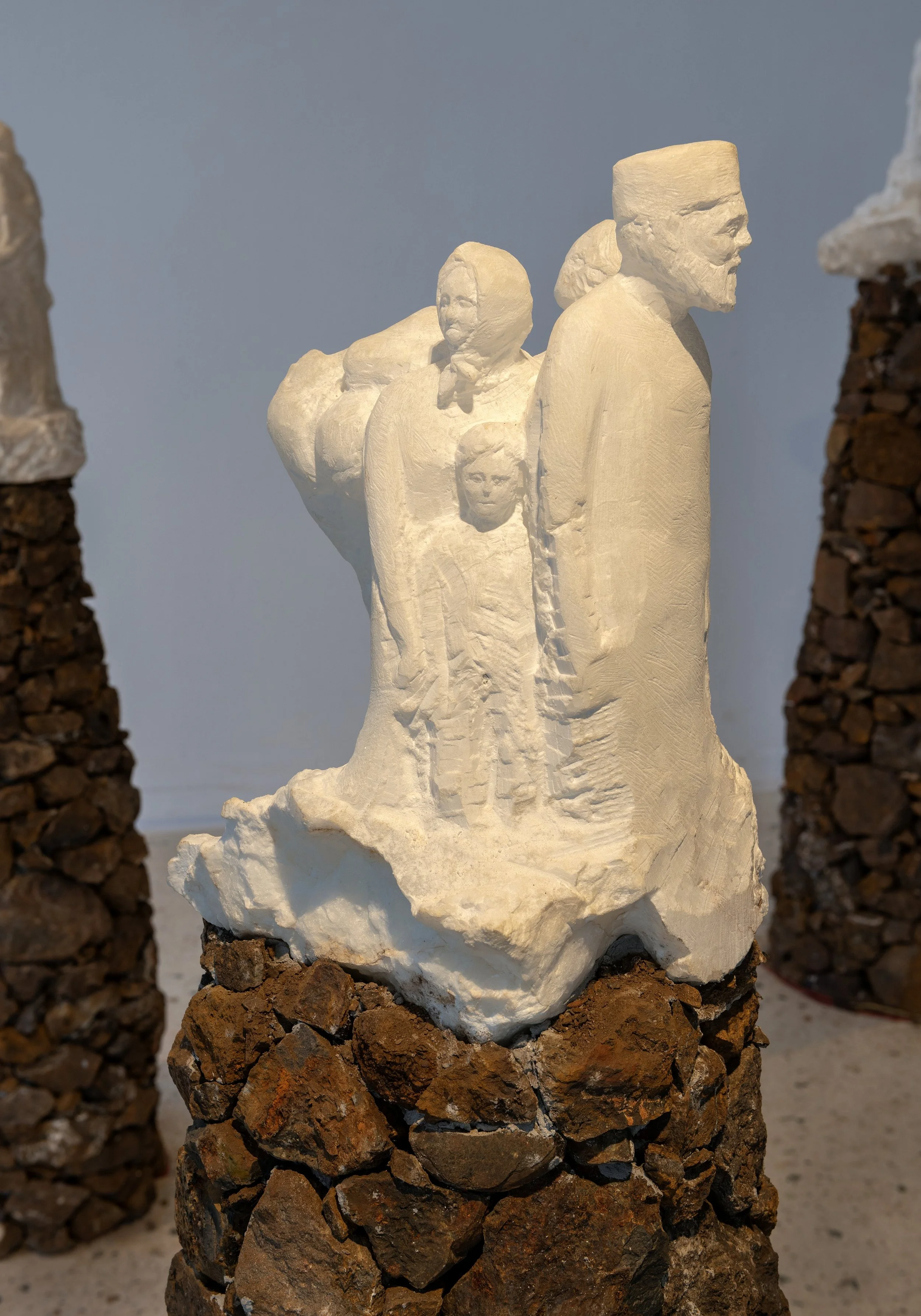
Beacons x3 (2025) Αlabaster, medal stones from Kythnos, light 120 × 30 × 30 cm Φρυκτωρίες x3 (2025) Αλάβαστρο, πέτρες μεταλλείου από την Κύθνο, φως 120 × 30 × 30 εκ.

Beacons x3 (2025) Αlabaster, medal stones from Kythnos, light 120 × 30 × 30 cm Φρυκτωρίες x3 (2025) Αλάβαστρο, πέτρες μεταλλείου από την Κύθνο, φως 120 × 30 × 30 εκ.

Last Dive (2025) Βronze, dry bush 110 × 100 × 100 cm Tελευταία βουτιά (2025) Μπρούτζος, φρύγανο 110 × 100 × 100 εκ.
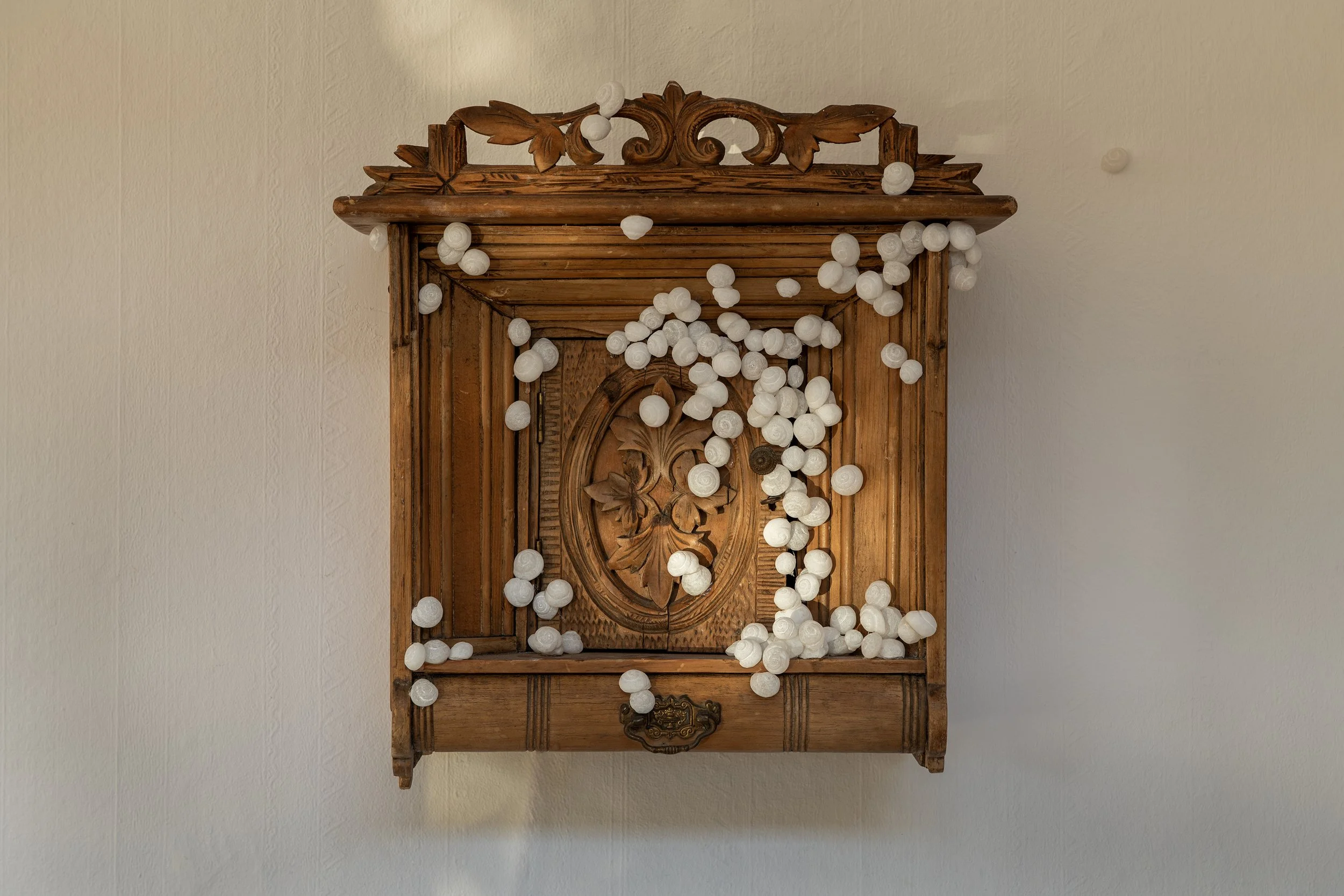
Litany (2025) Alabaster, wooden icon stand 35 × 30 × 15 cm Λιτανεία (2025) Αλάβαστρο, ξύλινο εικονοστάσι 35 × 30 × 15 εκ.
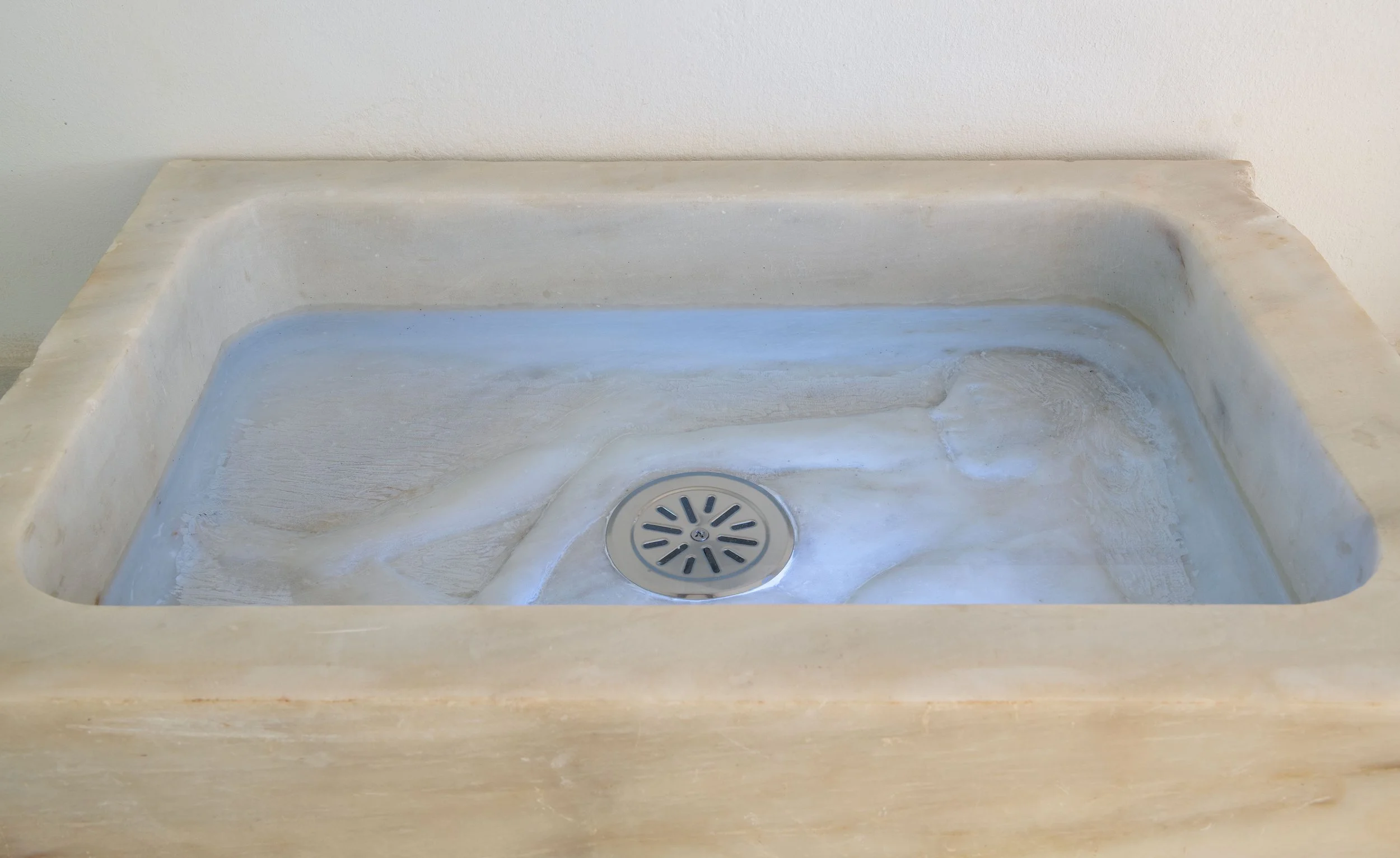
Pool (2025) Μarble sink, light, water 60 × 50 × 30 cm Πισίνα (2025) Μαρμάρινος νεροχύτης, φως, νερό 60 × 50 × 30 εκ.
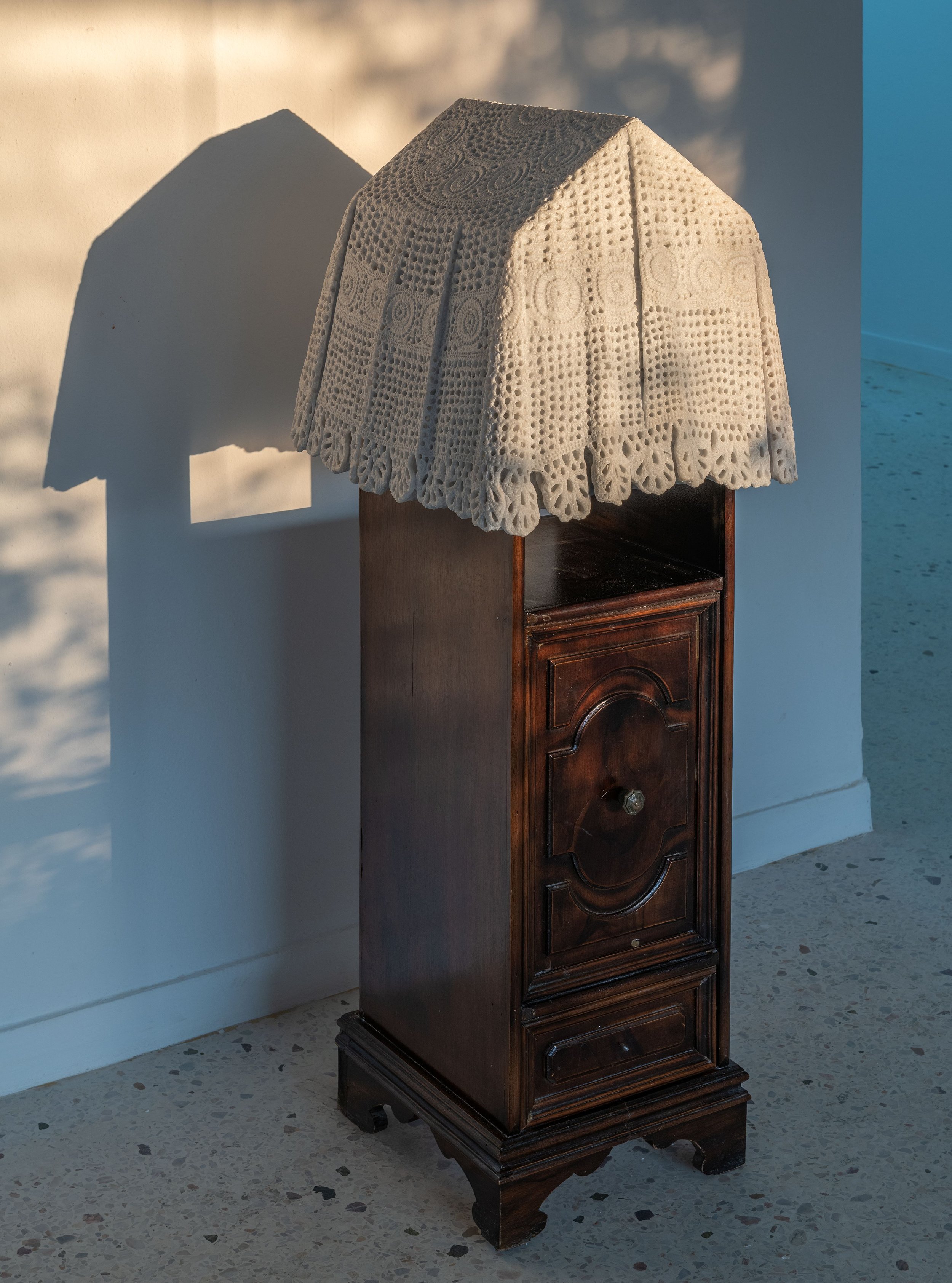
Prika (2023) Μarble, wooden nightstand 110 × 30 × 35 cm Προίκα (2023) Μάρμαρο, ξύλινο κομοδίνο 110 × 30 × 35 εκ.
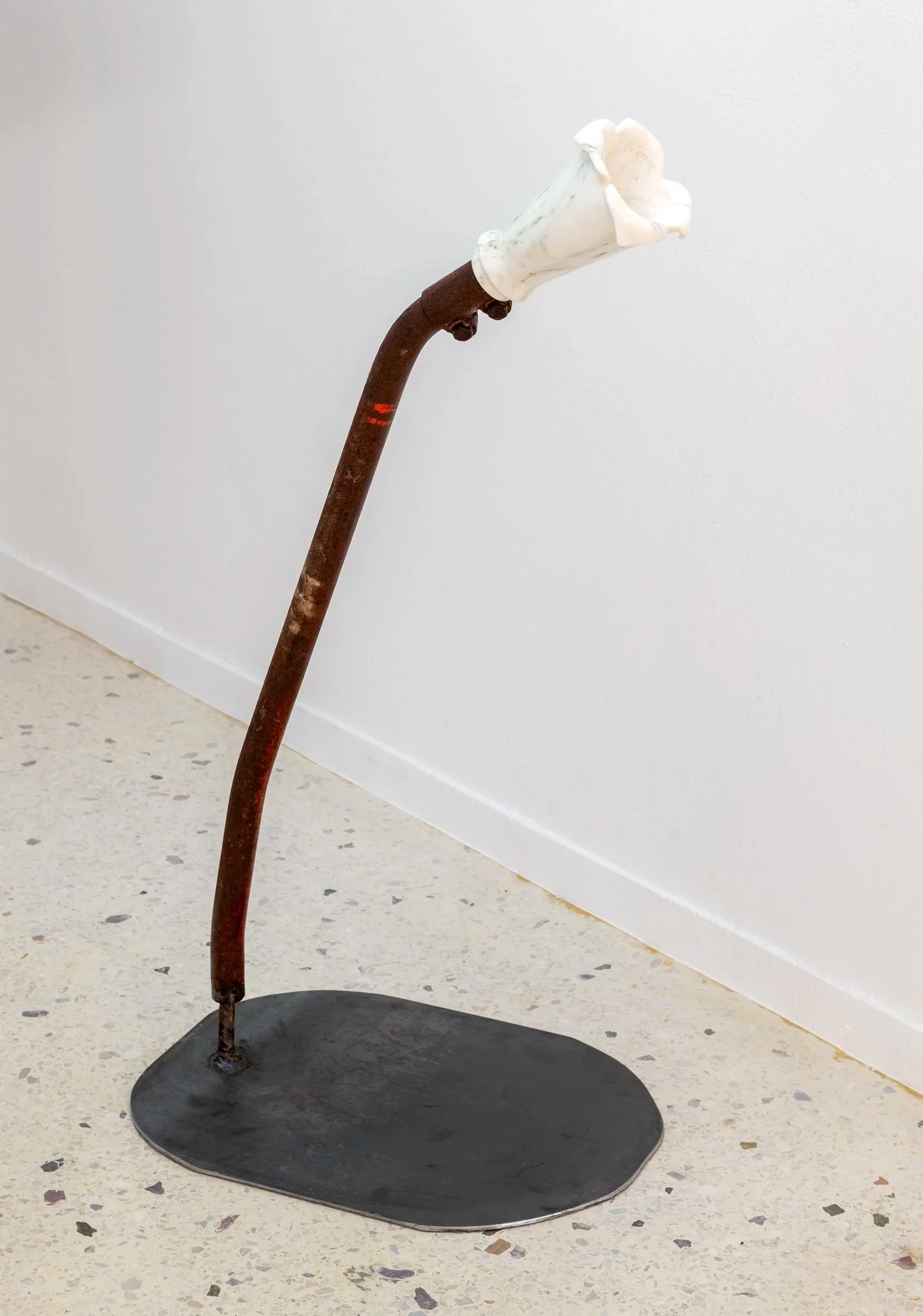
August flies (2024) Μetal, marble, speaker 100 × 30 × 40 cm Musical improvisation by Manolis Manousakis, Dimitris Pappas Αυγουστιάτικες μύγες (2024) Μέταλλο, μάρμαρο, ηχείο 100 × 30 × 40 εκ. Μουσικός αυτοσχεδιασμός Μανόλης Μανουσάκης, Δημήτρης Παππάς
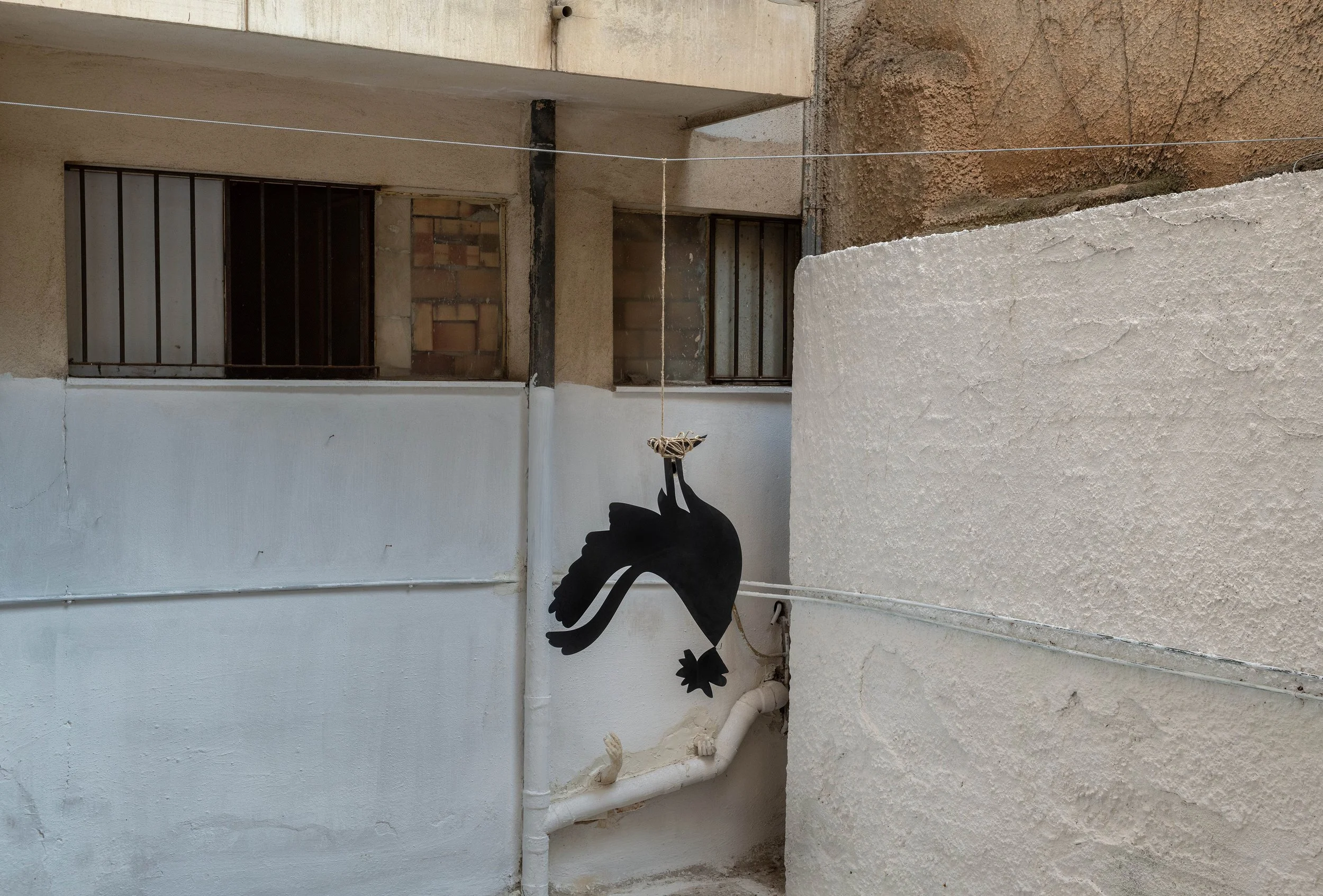
Foundation (2025) Black sheet metal 64 × 60 × 0.2 cm Θεμέλιο (2025) Μαύρη λαμαρίνα 64 × 60 × 0.2 εκ.
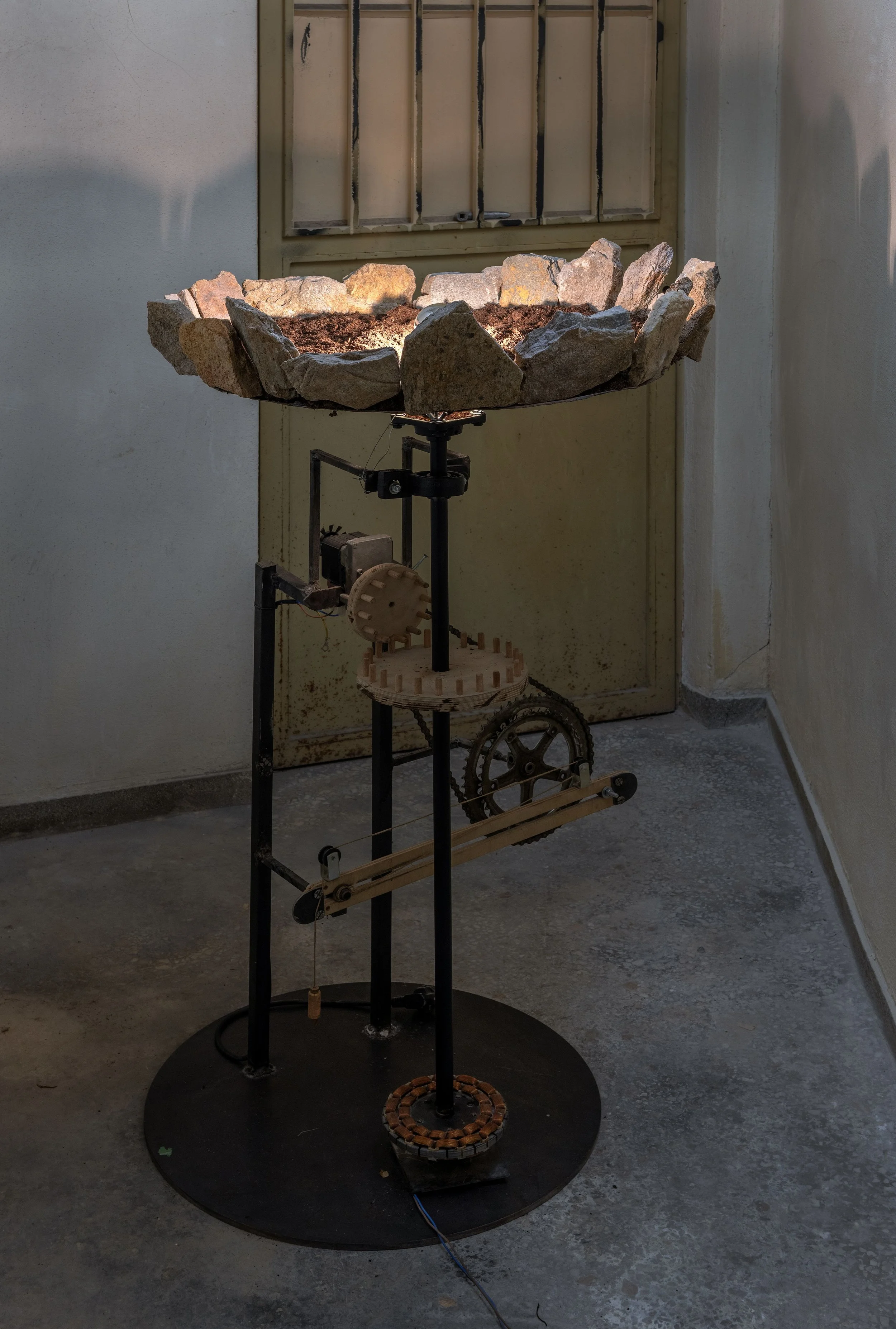
Atzouras (2025) Spit mechanism, iron, stones, soil, wood, sheet metal, lamp 110 × 60 × 60 cm Άτζουρας (2025) Μηχανισμός σούβλας, σίδερα, πέτρες, χώμα, ξύλο, λαμαρίνα, λάμπα
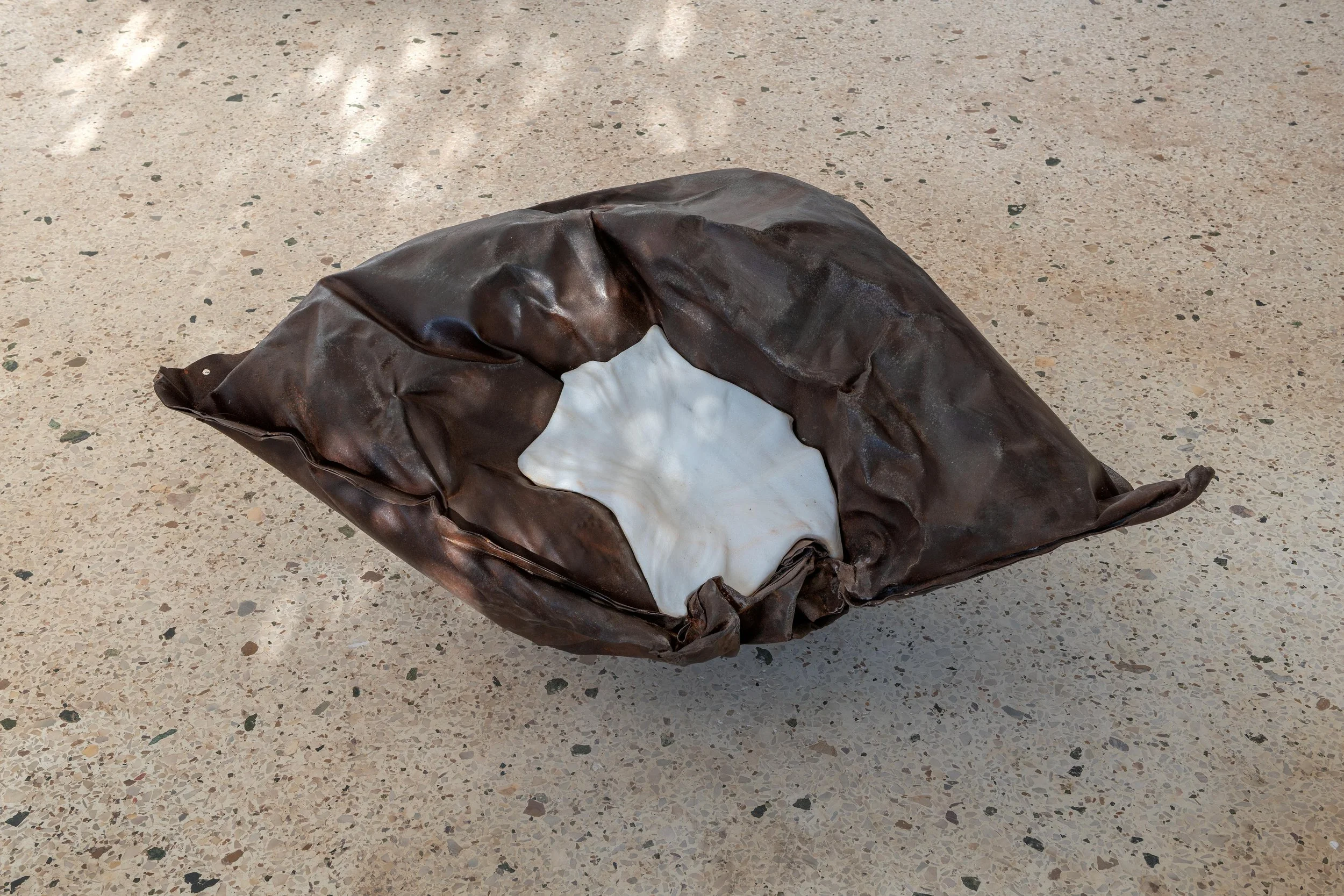
Kakovolo (2023) Marble, metal 90 × 90 × 35 cm Κακόβολο (2023) Μάρμαρο, μέταλλο 90 × 90 × 35 εκ.
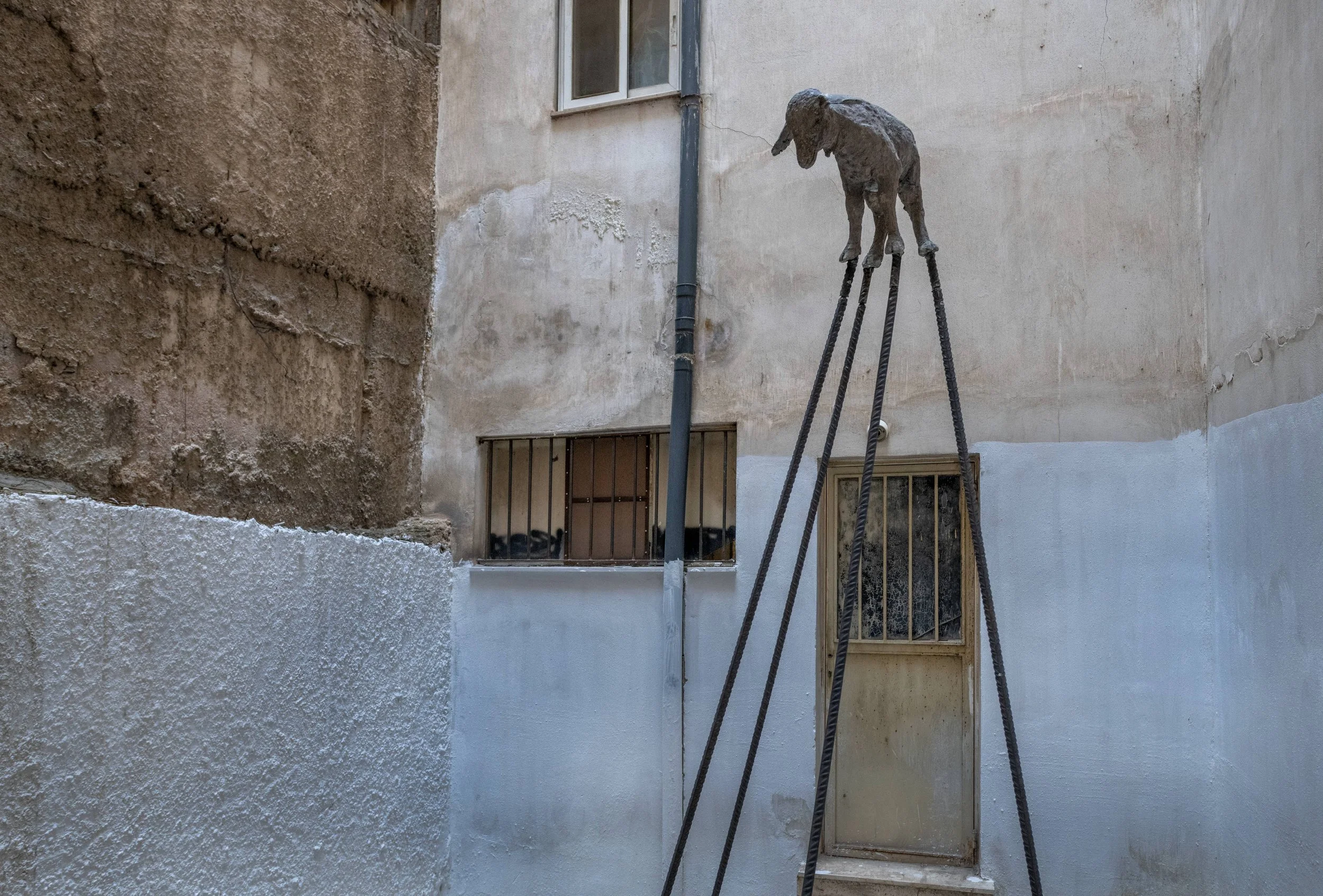
Waiting (2025) Rebars, cement 300 × 80 × 65 cm Αναμονή (2025) Mπετόβεργες, τσιμέντο 300 × 80 × 65 εκ.
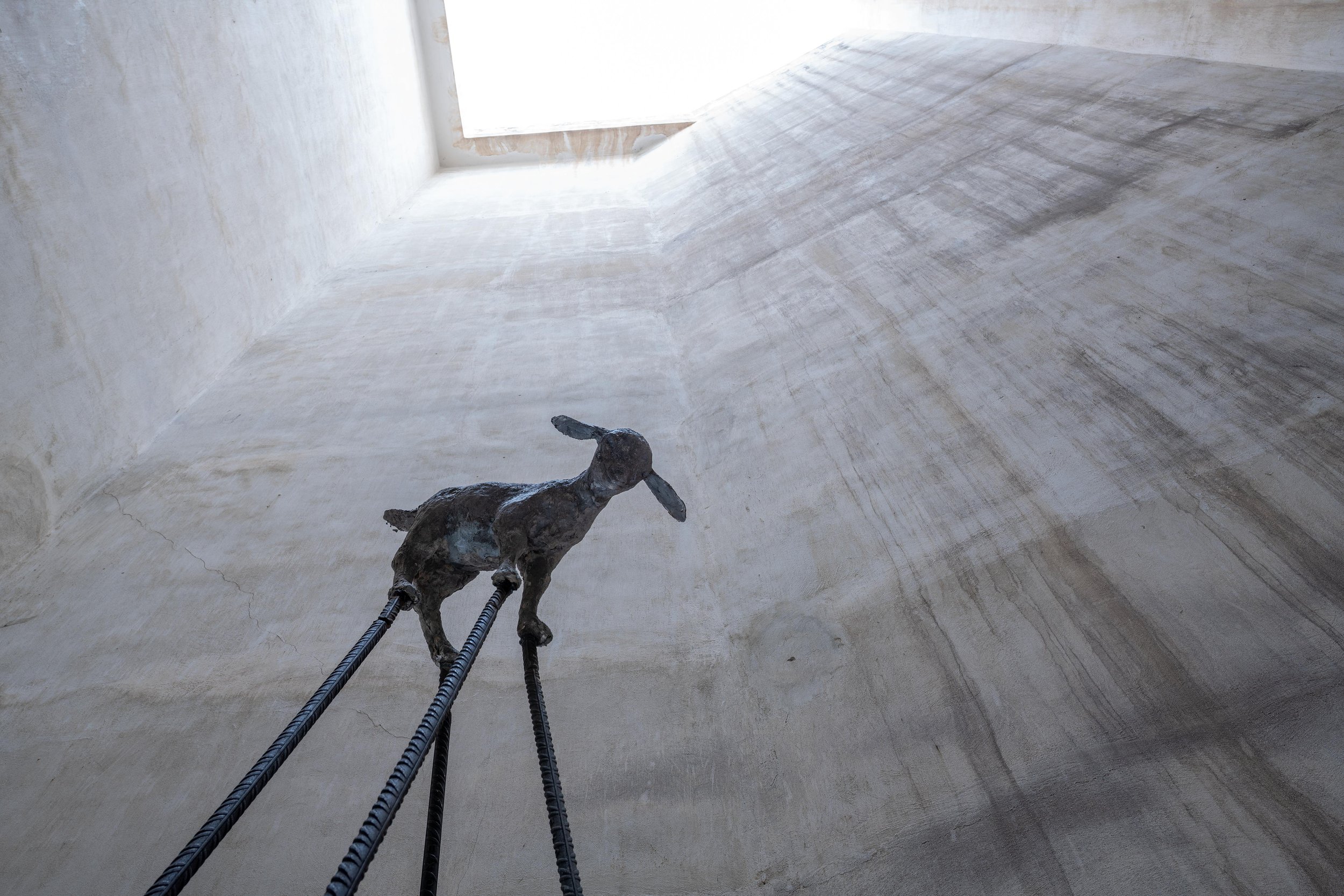
Waiting (2025) Rebars, cement 300 × 80 × 65 cm Αναμονή (2025) Mπετόβεργες, τσιμέντο 300 × 80 × 65 εκ.
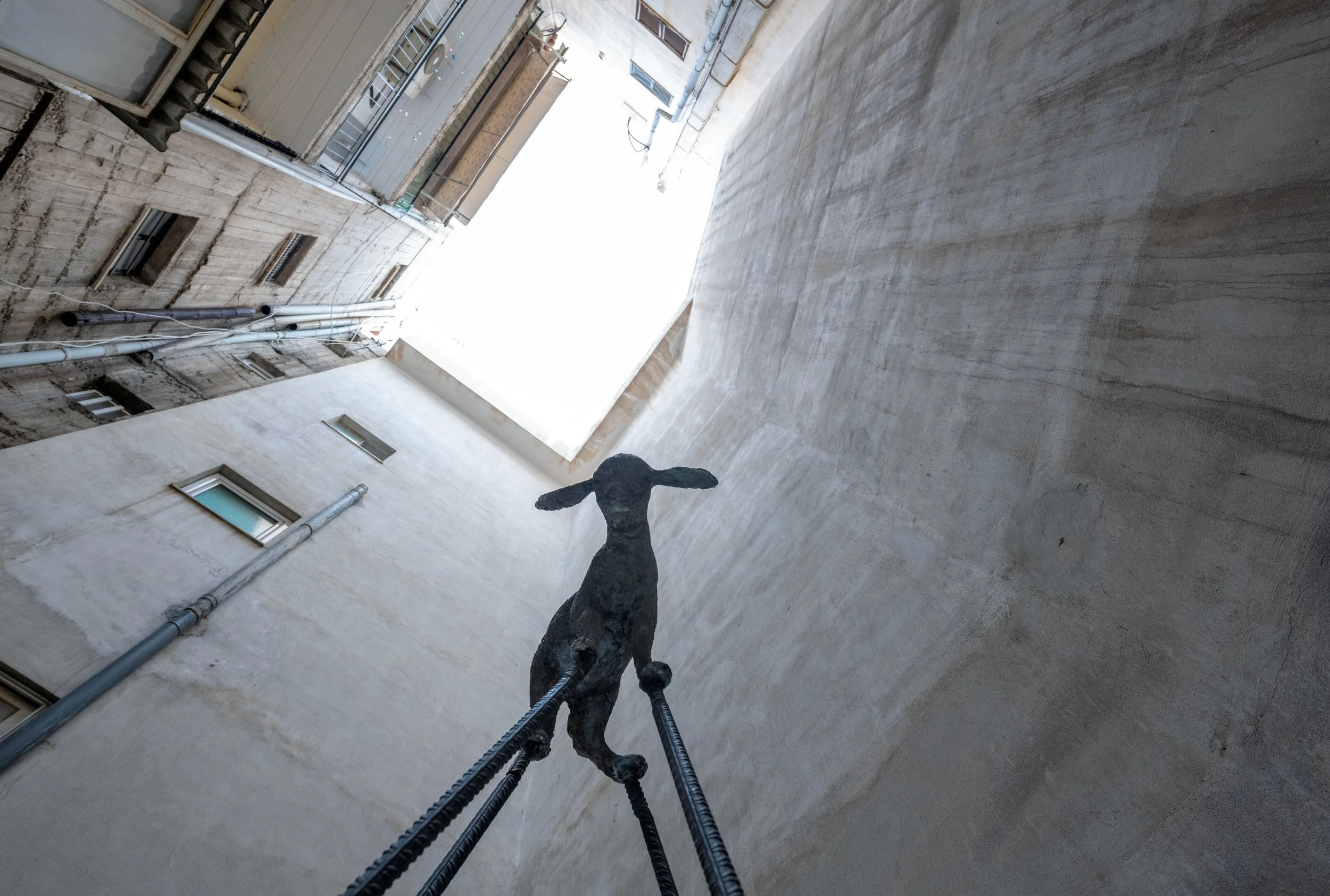
Waiting (2025) Rebars, cement 300 × 80 × 65 cm Αναμονή (2025) Mπετόβεργες, τσιμέντο 300 × 80 × 65 εκ.